Studying Poverty & Disability
Starting in the 1990’s the Vermont State Recognized Tribes began to claim that the reason there are no records of their presence for 200 years is because they needed to “hide” from the Eugenics Survey of Vermont (ESV). But what really was the ESV? And what evidence is there that it “targeted” Native Americans?

The Eugenics Survey of Vermont (ESV) took place from 1925-1936.
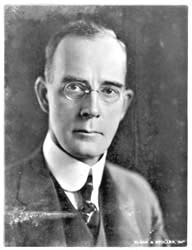
It consisted of seven major studies (see timeline below) under the direction of Henry F. Perkins at the University of Vermont. Some of the research conducted was used to justify Act 174: An Act for Human Betterment by Voluntary Sterilization that legalized voluntary eugenic sterilizations in 1931. Between 1930 and 1952, 256 known sterilizations took place in Vermont.
Read more about Henry F. Perkins’ objectives
According to Henry F. Perkins, the founder of the Vermont Eugenics Survey, the “Essentials of a Good Eugenics Program” were:
- Routine physical and mental examinations of school children with registration of defectives.
- Special classes in the public schools. (In rural as well as urban and village.)
- Clinics (some of them travelling) for use of schools, courts, prisons, welfare societies, orphanages, public health nurses, etc. etc.
- Mental Hygiene Society whose object shall be the education of public opinion so that both public and private funds may be available for a good Eugenics and Mental Hygiene program. Such a society should be in a position to give aid to local communities who wish to inaugurate a eugenics program.
- Social Workers to do follow‐up work for state institutions and clinics.
- Colonies for the Feeble Minded.
- Sterilization Law.
- Maternity and Prenatal Care.
- Visiting Teachers.
Timeline of Eugenics Studies

Family Studies of the Rural Poor
The researchers started by looking for evidence of “defective germplasm” in poor, rural families. Over the course of three years, they studied 62 families by reading case records from public and private institutions and conducting interviews with community members who knew the family (teachers, clergy, etc.), as well as members of the family themselves. The results of this study were used to make a case for sterilization legislation.

National Committee on Mental Hygiene Survey of Vermont School Children
After a high percentage of Vermonters failed the WWI draft test, a team of psychologists questioned if Vermont had a high percentage of children with disabilities. The researchers conducted IQ and personality tests on over 1000 public school children and children in special education programs. They were investigating if students’ results varied by race or socioeconomic status. They did not find a correlation and they found Vermont’s rates similar to the national average.

Key Families in Rural Vermont Towns
This study looked at families in Sandgate, Williston, and Lincoln. They continued to look for “bad heredity.” However, after being criticized for putting too much emphasis on heredity, Perkins published Francis Conklin’s 1928 study of “Better Branches of Degenerate Families” and wrote “Most families, perhaps all, both add and detract from the welfare of their communities,” in the Survey’s annual report.

The Women at the Rutland Reformatory
In 1929, a Eugenics Survey researcher conducted IQ tests on the inmates of the Women’s Reformatory at Rutland, a rehabilitation program for females convicted of crimes, including 45% for “sex offenses,” such as adultery or cohabitation. The study concluded that while “mental deficiency is a powerful factor” in determining risk of conviction, “Most of the women came from unfavorable homes and lacked the school training that we now consider as the minimum essential for meeting the problems of adult life.”

Brandon Waiting List
This study looked at children on the waiting list for the State School for the Feebleminded to evaluate their outcomes in the community without the school’s training. Researchers communicated with public agencies, family, and community members and conducted home visits with the children. They continued to consult “pedigree” charts created in earlier studies to look for correlations between families with “bad heredity” and the “degree of social and economic adjustment” of the children.

Migration Study
Researchers lived in three Vermont towns, Waitsfield, Cornwall, and Jamaica, for eight weeks to get to know the character and demographics of each. Specifically, they were interested in why people chose to stay in or leave a town and how that impacted the town’s “character.” The final recommendation of the study was that rural areas with fertile land be improved so that people would choose to stay there and migrate out of areas with poor farmland.

Ethnic Study of Burlington
The first ESV study that looked specifically at ethnicity, it examined the different factors that influenced achievement between different ethnic groups in Burlington: “Old Americans, Italians, French Canadians, Jews, Syrians, Greeks, Irish, Germans, and Nordic people.” It focused on how different ethnic groups think about relating with one another and advocates for groups to collaborate to build a stronger community and society.
Read primary source documents about these events
Vermont has an extensive collection of documents on its sterilization laws and the history of the Eugenics Survey of Vermont. Originals can be found in the University of Vermont Libraries Special Collections, Vermont Public Records, Vermont State Archives, the American Philosophical Society Library, and the Middlebury College Library.
Copies of over 200 of these documents (including some below) can be found at the website Vermont Eugenics: A Documentary History.
According to the Second Annual Report of the Eugenics Survey of Vermont (1928) the plan for the study was:
First, continuation of the indexing of all members of the pedigrees.
Second, a study of the better branches of delinquent and deficient families… The object is to find out how good a stock can be that has certain sources in common with some of the worst people in Vermont.

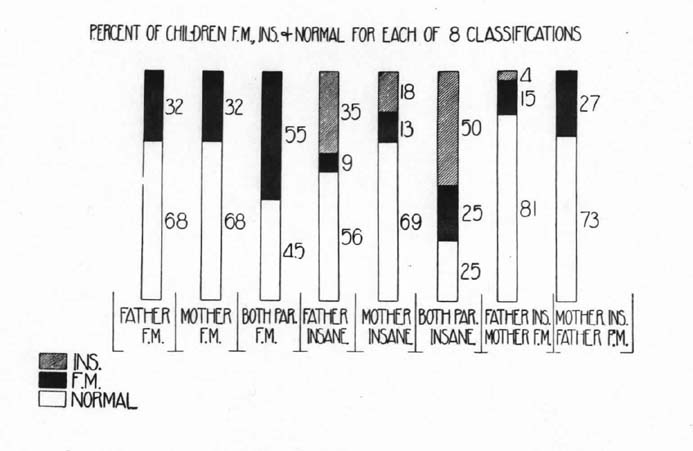
According to Proposal for Survey of Vermont School Children (Unpublished manuscript) Henry F. Perkins (1926) the purpose of this study is:
To make a study of school children with the idea of finding the extent of mental and physical defect and the relation of these to the school grade, behavior, race, social and economic status of the family, language spoken in the home and, if possible, in a few cases, to the mentality of the parents.
The Third Annual Report of the Eugenics Committee (1929) summarizes the results of the study as:
Our basic thesis is this: The families that live in a town for several generations make their mark, for both good and ill, upon that town. They help or hinder its growth and give it their own moral, intellectual, and social tone. Most families, perhaps all, both add and detract from the welfare of their communities. Their contribution may be measured as regards the past, and predicted for the future in terms of their more positive hereditary traits, whether these are predominantly constructive or social, or destructive–antisocial.
The study was summarized in the Fourth Annual Report of the Eugenics Survey of Vermont (1930):
The purpose of this study was primarily to ascertain the mental levels of the group of women at the Reformatory….
The study was extended over a period of several months so that a representative cross-section of the group coming to the Reformatory was gained. One or more interviews were held with each woman and a psychological test given each.
The quotes above, which summarize the findings of the study come from the Fourth Annual Report of the Eugenics Survey of Vermont (1930). In full that section states:
The study sought to throw some light on the characteristics of the Reformatory group, particularly in regard to mental capacity. It omitted many obvious and important aspects of the problem. But it brought out that the women in Rutland Reformatory represent a somewhat selected group, handicapped more than the average of the general population by unfavorable early environing influences and by limited mental capacity.
Most of the women came from unfavorable homes and lacked the school training that we now consider as the minimum essential for meeting the problems of adult life. They were mostly untrained workers who had gone into occupations which afford little supervision and which offer many temptations.
When besides these unfavorable environing influences we find a limited mental capacity, the latter seems to play the determining part in upsetting the balance toward delinquency in a time of stress when it is essential to have the capacity for clear insight and forethought concerning the social results of certain forms of conduct.
The crimes for which the largest number of the women at the Reformatory have been committed are crimes of submission or crimes of imperfect emotional control. It is generally recognized that mental deficiency is a powerful factor in determining just such crimes. L`Most of the women have subnormal intelligence. Yet we have assumed the responsibility of ”punishing” them as though they were “normal persons who had chosen to act as though they were not normal persons.” And we have been so concerned about the offense, that we have given but little thought to the offenders.
The methods for this study was described in the Fourth Annual Report of the Eugenics Survey of Vermont (1930):
A list of the names was then secured from the Brandon State School for the Feebleminded of those who had at any time prior to August, 1929, been referred to the School, but not admitted…
Home visits are being made to each individual and interviews held with members of the family and himself‐‐usually a psychological test being given him. Visits are also made to schools, to places of work and to interested persons
The methods for this study are reported in the Fifth Annual Report of the Eugenics Survey of Vermont (1931):
Three field investigators spent eight weeks or more in each town, participating in the social life of the community and visiting every family. To ascertain the extent and nature of recent migration, information concerning every member of each family, whether living at home or having left within the last two decades, was recorded on a prepared schedule.
The recommendations summarized above are from the same document:
Recommendations. To maintain people of fine stock in the rural communities two conditions are most essential. One is that in the rural sections which are fertile and well suited to cultivation conditions be so improved that people who really love the land are encouraged to remain. The other is that in the rural sections where the land is poor and little suited to cultivation the people be encouraged to leave for more progressive communities, lest deterioration in the quality of the stock of future citizens occur.
One line of action that is necessary to holding a fine class of people in the rural communities is that both the economic and social conditions of the farmers in the good rural sections be improved. Economic improvement for Vermont farmers can be brought about by greater cooperation in marketing, and by producing and selling products of only first class quality‐‐for Vermont’s future prosperity lies not in the quantity but in the quality of its products. Amelioration in the social life can come only through better rural schools, improvement in rural health conditions, and in means to enjoy comforts and modern conveniences. Such improvements will do much to encourage people of fine character, who really love the land, to remain in the rural communities; and only when such improvements have been made can the people be encouraged to raise larger families so that the same fine quality of stock may always be represented in the rural towns of the State.
The second line of action is, if anything, more important than the first. It is that the State encourage people who live on marginal land to move to the more progressive communities of the State by taking over all marginal land. This of course would demand first a careful study of each township to determine reorganization on the basis of the uses for which land is best suited. It may appear at first a costly program, but in the long run it will repay a hundredfold in human values even more than in land values. Deterioration can take place only in poor isolated communities where the potential capacities of the people are not challenged into use. If then Vermont wishes its future citizens to have the same fine qualities of character that marked the early builders of the State, it must pursue a line of action that will prevent deterioration from taking place by providing a social environment that will continue to bring out all the fine qualities in the character of its people.
This study was conducted by Elin Anderson, she summarizes the study in her paper A Study of Cleavage in an American City (1937), quoted on the website “Vermont Eugenics: A Documentary History“:
This study was made under the auspices of the Eugenics Survey of Vermont. At first glance a study essentially sociological may seem outside the province of such an organization. The eugenist is interested in the American problem of ethnic adjustment primarily in terms of the biological blending through intermarriage of the most desirable qualities of peoples. Yet because he finds that racial and religious prejudices frequently stand in the way of any ideal biological blending, his first task becomes the elimination of the environmental causes of such prejudice. Hence such a study as this, whatever sociological purpose it may serve, is an attempt at providing some groundwork upon which may be built a eugenic program of the future, based on a full and uninhibited appreciation of the intelligence, special abilities, and social qualities of our diverse peoples.
More information about Anderson’s research can be found in her book We Americans (1937)
Sterilization

In 1931, An Act for Human Betterment by Voluntary Sterilization passed in the Vermont legislature.
Overall, about 256-259 people were sterilized in institutions between 1931 and 1968.

Where does this data come from?
The data in this graph comes from two separate sources which are placed next to each other to show their general agreement.
In gold, are the totals by year from counting the specific records of individual who were sterilized. (Records in Vermont State Archive). Total 256.
In grey, are the numbers reported in “‘… Three Generations of Imbeciles Are Enough…’ State Eugenic Sterilization Laws in American Thought and Practice” by Julius Paul (1965). In the original document, cumulative numbers are reported every few years. For ease of comparison those numbers have been averaged out over the years they cover in this graph. Total 259.
In In 1981 and 2013, Vermont Sterilization laws were updated.
Current law now requires that for voluntary sterilizations an individual must be “over the age of 18” and allows involuntary sterilizations “only after a hearing in the Superior Court.”
Abenaki Connection
In numerous publications, members of the Vermont State Recognized tribes claim that the Abenaki were victims of the ESV.
However, publicly available evidence to support these claims is lacking.
Claim: Military Vehicles and Mass Sterilizations
On November 4, 1995, in a letter to the editor of the Burlington Free Press titled, “Victims left out,” Charles Lawrence Delaney II of the Abenaki Nation of Missisquoi claimed that:
Without due process, summarily ignoring habeas corpus, Abenakis were sent to Windsor State Prison and Waterbury Hospital. Perkins, with help from Norwich University cadets, U.S. Army officers and military vehicles, assembled a mobile field hospital. Mass sterilizations and medical experimentation was the result of this effort.
Charles Lawrence Delaney II of the Abenaki Nation of Missisquoi


Evaluation of Evidence
As cited above, about 256-259 people were sterilized over a period of 37 years. The vast majority of these were performed at the Brandon Training School on people who were deemed “feeble minded.”
The Eugenics in Vermont: A Chronology of “State-sanctioned eugenics policies and practices” was created as part of the proposed apology by the General Assembly of the State of Vermont for its part in eugenics and includes a timeline of “State Institutions, Agencies, and Acts with Eugenics Involvement Authorized and/or Funded by the Vermont Legislature.”
According to this research, in 1925, the superintendents of the Vermont State Hospital for the Insane (Waterbury) and the Vermont State Prison and a Norwich University faculty member were on an “Advisory Committee” formed by Henry F. Perkins. However, there is no mention of a field hospital, army, or military involvement.
Claim: 3,400 Abenaki women sterilized
This number is quoted in various documents, including the UVM College of Education and Social Services “Abenaki Land Acknowledgement” which states:
Many familial groups that remained in Vermont were eradicated in the early 20th century through forced sterilization and pregnancy termination policies, with over 3,400 reported cases of sterilization.
UVM College of Education and Social Services “Abenaki Land Acknowledgement”
Also cited Burlington Free Press article, “Vermont Abenaki build cultural awareness” (2016).
Evaluation of Evidence
The paper Native American Women and Coerced Sterilization: On the Trail of Tears in the 1970s, describes a report from the United States Government Accountability Office (GAO) which found that at Indian Health Services facilities in the Western United States, “although some kind of informed consent had been acquired from these women, no common consent form was used” in 3,406 sterilization procedures.
None of these facilities is in or near Vermont, and because the Vermont State Recognized Tribes are not Federally Recognized, they would not have had access to these facilities.
